
How to Search the Fredericksburg Court Docket
Start at the city's own page for the Fredericksburg Municipal Court. It describes the court and gives the clerk's contact details. It offers no public database for searching names or case numbers. That makes the clerk your real tool. Call with the citation or case number in hand. Also give the full name on the ticket and the agency that issued it. If the case turns out not to be a city matter, the Gillespie County system is the next stop.
- Determine whether Fredericksburg Police or the city filed the citation or ordinance charge.
- Call 830-997-9935 or visit 103 Industrial Loop, Suite 1000 during published hours.
- Give the clerk the citation or case number and ask for the public docket, setting, status, or copy needed.
- Confirm the date and appearance instructions directly; do not infer them from a payment screen.
- If the clerk has no municipal match, use the Gillespie County court docket and route by case type.
Fredericksburg Docket Search Has No Listed Portal
The city's pages do publish court descriptions. They also list ways to pay, a warrant notice, and a fine-schedule contact. There is no form anywhere on them for finding cases by a person's name. Treat that as a plain local fact. Do not treat it as an invitation to use some unrelated database. The clerk handles filings, public requests, fines, and docketing. Case-specific information comes from that office.
Start with the clerk. A city payment confirmation is not the procedural history, and a failed county search does not establish that a Fredericksburg municipal matter is absent.
The Fredericksburg Municipal Court
Fredericksburg Municipal Court serves as the city's judicial branch. Its docket covers fine-only Class C misdemeanors cited or filed by Fredericksburg Police. These come from transportation, penal, education, health and safety, and alcoholic-beverage law, along with city ordinance violations. Settings range from initial appearances and show-cause hearings to pretrial conferences, bench trials, and jury trials. The presiding judge is Shelley Becker. That name helps you route a request; it says nothing about how a case ends. The official Fredericksburg court page is the controlling source. Use it for the court's role, location, contact, and hours.
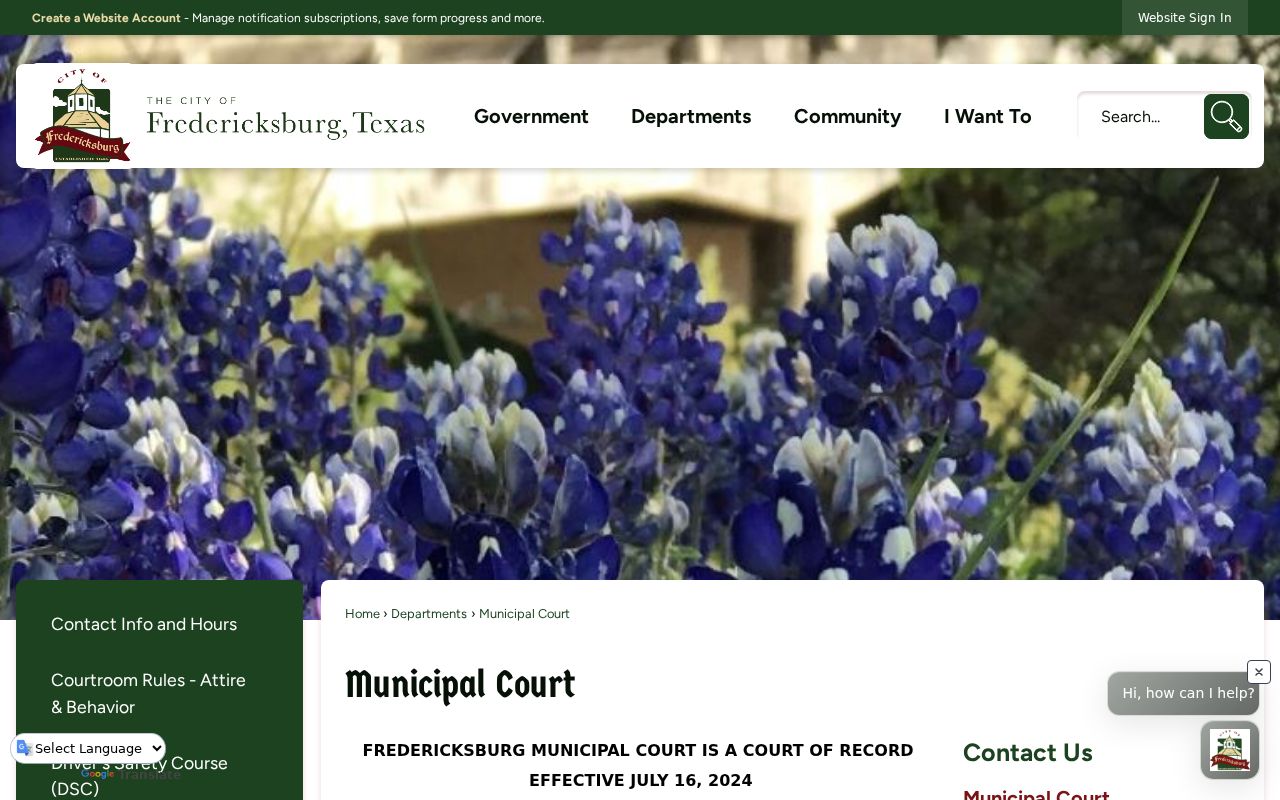
That city source also keeps the municipal docket distinct from the county's Tyler portal and the wider Gillespie County court structure.
Fredericksburg Court-of-Record Status Since 2024
Per the city, Fredericksburg Municipal Court became a court of record effective July 16, 2024. The label means the court keeps a record tied to its proceedings. It also affects their appellate treatment. It does not create a public online docket. It does not stretch city jurisdiction into county-level cases either. The city publishes no current appeal instructions. So anyone appealing should get the notice requirements and deadline straight from the court rather than assume a generic trial-de-novo process works. For docket purposes the date matters. Cases filed before and after July 16, 2024 may follow different procedures. So when you request a transcript, recording, certified copy, or appellate document, tell the clerk the filing date. Then ask for the current steps.
Fredericksburg Court Dates and Settings
A setting on the Fredericksburg docket could be an initial appearance. It could also be a show-cause proceeding, a pretrial, or a bench or jury trial. The city posts no public calendar grid. It also says nothing about how far ahead dates publish. Confirm every date through the municipal clerk. One caution: a payment deadline, a warrant notice, and a trial date are three different things.
| Date | The current setting date confirmed by the clerk or court notice. |
|---|---|
| Time | The stated appearance time; ask whether it is a docket call or individual setting. |
| Location | 103 Industrial Loop, Suite 1000 unless the court directs otherwise. |
| Judge | The presiding judicial officer shown by the notice or clerk. |
| Setting Type | Initial appearance, show cause, pretrial, bench trial, jury trial, or another stated event. |
Holidays and emergencies can change operations, so call ahead before you drive over. The court is normally open Monday through Thursday, 8 a.m.–4 p.m., and closed Friday through Sunday plus city or county holidays.
The Fredericksburg Court Counter at Industrial Loop
You can reach the court counter at 103 Industrial Loop, Suite 1000, Fredericksburg, Texas 78624. The phone number is 830-997-9935, and the fax is 888-269-0249. Window service runs during the posted Monday-through-Thursday hours. The payment page lists an after-hours drop box as well. A 2018 City Council memo described relocating the court from the County Annex. The new spot was an Industrial Loop facility across from the Law Enforcement Center. For the current address, trust the municipal page over that older memo.
Fredericksburg Municipal Court
103 Industrial Loop, Suite 1000
Fredericksburg, TX 78624
830-997-9935
Monday–Thursday, 8 a.m.–4 p.m.
Fredericksburg Traffic Tickets
A traffic citation or other fine-only Class C matter written by Fredericksburg Police generally goes to the municipal court. When you contact the clerk, use the number printed on the citation. Ask about the alleged violation. Ask about the current setting, your plea or response options, the balance, and any public copies. A charge is only an allegation. A payment or status entry proves nothing beyond what the record itself states.
At the window the city takes cash, check, money order, and cards. Card payments online or by phone go through AllPaid, which adds a processing fee. The fine-schedule page tells you to contact the court for the current amount. So skip any old copied schedule. For the countywide split between municipal and justice-court citations, see Gillespie County traffic court records.
AllPaid Is Not a Fredericksburg Docket Search
The city’s payment-method page shown here identifies AllPaid and Pay Location Code A0009R.
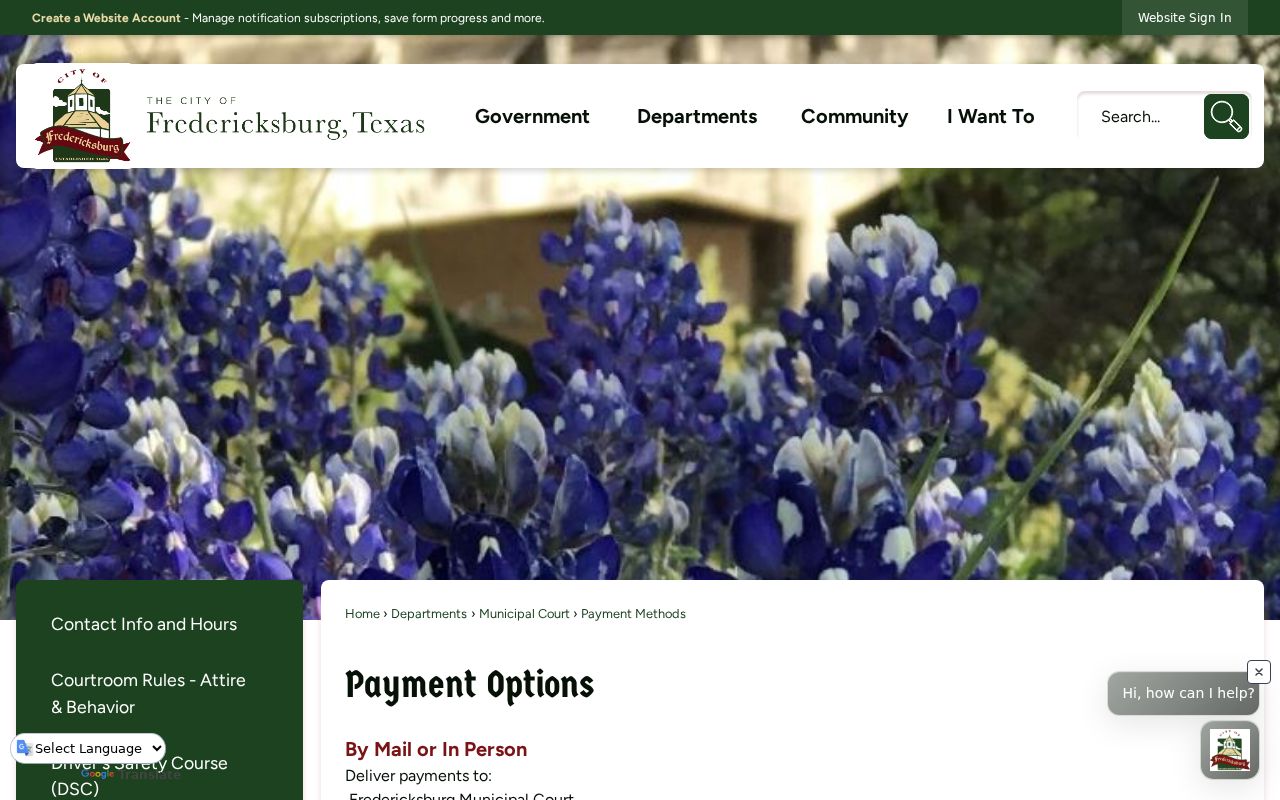
AllPaid settles a balance you already know about. It is not a docket search. It will not show a full event history, and it cannot tell you whether a hearing was reset. Get the Fredericksburg court docket from the clerk first, then use the payment channel once you have confirmed the right matter and your response options.
Where Fredericksburg Cases End Up
Not every case born inside Fredericksburg city limits stays at the municipal court. Justice Courts take many fine-only Class C matters. They also handle small claims, civil disputes up to $20,000, and evictions filed in the right precinct. The county tier sits above them. County Court and County Court at Law handle county-level misdemeanors, probate, guardianship, and civil matters assigned there. For the heaviest cases, the 216th District Court hears felonies. It also takes district-level civil, family, and juvenile files.
Docket flow: Fredericksburg Municipal Court › Gillespie County Courts › District Court
Jurisdiction decides the search, not the street address. A felony, divorce, probate, or larger civil suit with a Fredericksburg address still belongs elsewhere. The Gillespie County court docket maps each county tier to its clerk and the right access channel.
Fredericksburg’s After-Hours Magistrate Rotation
The municipal court wears two hats. On weekdays it serves as magistrate for Fredericksburg Police. It also joins a five-week after-hours and weekend rotation serving every Gillespie County law-enforcement agency. That countywide magistrate work is separate from the ordinary municipal docket. A magistration tied to another agency does not mean the later charges get filed as a Fredericksburg ordinance or Class C case. So when a search touches arrest, bond, or magistration, ask which court actually received the filed case. The answer might point you to county jail and bond categories, a Justice Court, County Court at Law, or District Court.
Fredericksburg Warrants and Time Payments
The city’s warrant notice sends questions to the municipal court and explains a time-payment reimbursement fee.
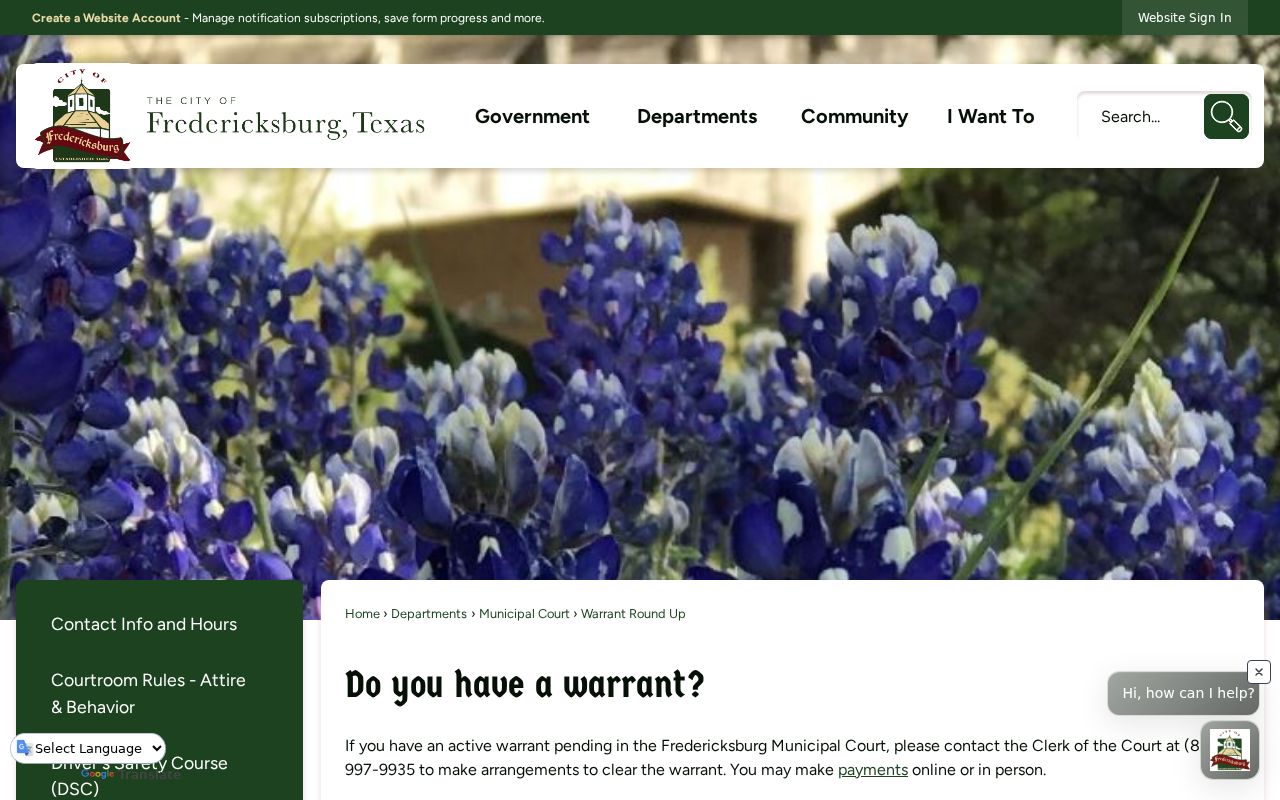
The notice cites Code of Criminal Procedure Article 102.030. A $15 reimbursement fee may apply under it. That fee applies when a judgment is not paid in full within 30 days. The court also lists possible alternatives: a time-payment plan, community service, or an indigency waiver. Eligibility and current terms rest with the court itself. Call the clerk instead of assuming the notice is a universal payment plan.
Fredericksburg Fine Amounts Come From the Clerk
The official fine-schedule page tells readers to contact the Municipal Court for current amounts.
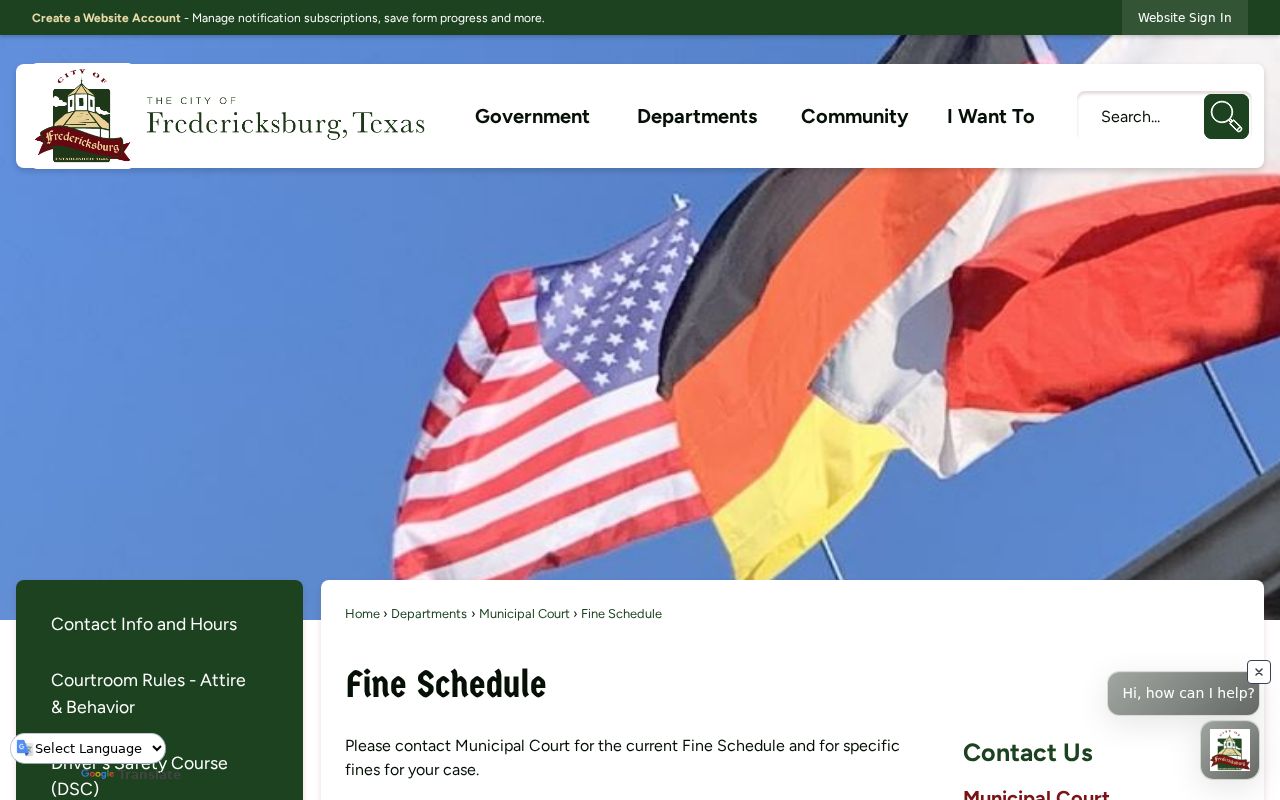
That instruction guards you against stale figures. Before sending funds, confirm the case, the amount, any processing fee, and the deadline, plus whether paying would resolve the matter or affect it some other way. Paying, requesting an alternative, and contesting are three different procedural choices.
Fredericksburg Court Docket Activity in FY2024
The Texas Office of Court Administration municipal report tracks Fredericksburg’s FY2024 activity. It counts 281 active pending at the start. The report adds zero reactivated, 1,127 added, 1,424 disposed, 198 inactive, and 271 active pending at the end. The report uses a 2023 population of 11,542. Census QuickFacts separately lists a 2020 Census population of 10,875. So do not blend the two vintages.
These administrative totals are not convictions, warrants, collections, or guilty findings. They measure fiscal-year flow and give a sense of scale. For any single matter, the Fredericksburg court docket itself is the source.
Public Access to Fredericksburg Court Records
For municipal case records, the clerk is the practical starting point. Texas judiciary information answers to Supreme Court rules, statutes, common law, and court orders. It does not answer to any promise that every city file sits online. When you request a record, give enough detail to identify it. Ask whether an ordinary or certified copy is available. Sensitive, juvenile, sealed, expunged, nondisclosed, or otherwise restricted content may be withheld.
Key Rules:
Texas Government Code §552.0035: judiciary access follows judicial rules and other law.
Texas Rule of Judicial Administration 12: governs access to covered judicial records outside adjudicative case files.
Texas Rules 21c and 76a: protect sensitive data and govern civil-record sealing.
A document missing online may be restricted or simply not published remotely. Verify the court, case number, style, and dates. And never treat a name match or a citation as proof of identity or guilt.